How the local church is plugging the gap
Taken from a recent article Jenny Herrera wrote for Stewardship: https://www.stewardship.org.uk/blogs/nearly-25-uk-adults-received-support-their-local-church-2020-how-local-church-plugging-gap
When we think of frontline workers, our mind instantaneously goes to the bold and the brave.
Perhaps nurses caring for patients during the darkest days of Covid, firefighters who put their lives at risk to save others from a burning building or members of the police who seek to protect the population from criminal activity.
Yet the local church is another frontline worker - just without the universal uniform and the official status. After all, Christians Against Poverty (CAP) recently recorded1 that 23% of UK adults, around 12.5 million people, have received support from a local church or Christian organisation in the last five years. That’s significant.
The Church continues to have an important role to play in modern-day Britain
For an institution which has declining power and autonomy, and for a religious faith that has never been under greater scrutiny as to whether it’s thriving or dying out, that is a remarkable percentage of the population who have been positively impacted. The CAP study also reported that 65% of UK adults believe churches will play an important role supporting people in the next twelve months. We should magnify the seen and unseen ways that Christians and churches are quietly picking up the needs of their communities in this gap - ushering in support where statutory services often fall short.
“The Church has been there for all of us”
The beauty of the local church, here in the UK at least, is that there is a church within every community - be it a tiny village church that is over a thousand years old, or a booming church that meets in a converted warehouse. As the Conservative politician Michael Gove once stated: “The Church has been there for all of us – it’s been burying our dead, it’s been comforting the bereaved, it’s been feeding the poor and it’s been praying for the nation.”
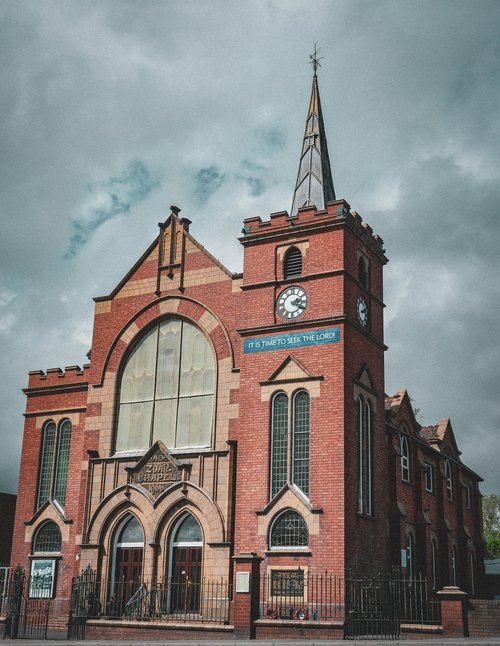
Churches up and down the country fling open their doors every single week to their communities: from new-mums looking for a baby and toddler group as a way to fill their days and find a listening ear, to people living on the streets desperate for a shelter for the night, to dementia cafes as a way to give carers and sufferers much-needed respite. It’s through this model of relationships-first that church members learn of the needs of the people who would perhaps otherwise never enter a church, a gap that official services cannot when funding cycles run out, and budgets are cut or changed.
Acts 435 works through a network of local churches and charities, who raise awareness of a need in their local community, which is then posted online for a Christian, or generous donor, to meet - often within hours. The donor then receives a personalised thank you message of a life transformed - as was the case for Marie.
She was living in different temporary accommodation for 10 years, and had recently moved into her first permanent home. Her friend gave her a bed, but she had other needs for her new home. The local Advocate, connected to a local church, picked up on these needs. Touched by the generosity of strangers, Marie said:
“I’ve got everything I need now, after living in one room for 10 years. I’d like to thank everyone that donated as they’ve made my life hunky dory.”
We all long to be seen, heard and valued
Other needs vary. A washing machine has just broken down for a family of six, and they need a way to wash their kids’ uniforms so that they can go to school and feel like they belong instead of using the second-hand pile.
A refugee has just arrived from Afghanistan and whilst they wait for asylum, they are given just £9 a week to live off. Instead, they are offered bikes so that they can go to English lessons, and exercise.
A mum is fleeing her abusive partner and is moving somewhere completely new so she can escape their past, and to ensure her children don’t live in constant fear.
Every circumstance is different, but the needs are universal: to be known, valued and heard. This is something every church, regardless of their theology, denomination or resources can offer, filling the gap where it is most needed.
What is beautiful is that churches are quickly, and quietly already picking up the pieces. The Stewardship Generosity Report demonstrates that committed Christians give almost five times the UK monthly giving average, with young adults (18–24) giving the highest proportion of their income at 11%. That alone should inspire hope in us all.
- Christians Against Poverty, Beyond Belief Report: https://capuk.org/about-us/policy-and-research/beyond-belief-report
- Stewardship, Generosity Report: https://www.stewardship.org.uk/generosity-report